Private preview build - includes images still pending permission. Do not publish; use dist-public/.
The evidence-first guide to longevity toolsPlain-language summaries of peer-reviewed researchRed light · sauna · recovery · sleep · skinEducation only · not medical advice
← All articles Primer

Red Light Therapy 101: How Photobiomodulation Works

What red light therapy is, what happens inside your cells, and why dose and device matter.

4 min read · 6 references

A new name for an old idea

Researchers now call red light therapy photobiomodulation (PBM); older papers use the term low-level laser (light) therapy, or LLLT. The principle is the same: low-intensity red or near-infrared (NIR) light is applied to the body to stimulate, heal and regenerate tissue.[1] Unlike ultraviolet light, it is not used to tan the skin.

What happens inside the cell

The leading explanation centres on the mitochondria. Reviews by Michael Hamblin and colleagues identify cytochrome c oxidase — part of the mitochondrial respiratory chain — as a primary light-absorbing molecule. Its activation is followed by an increase in ATP (cellular energy), a brief burst of reactive oxygen species that acts as a signal, and a release of nitric oxide.[2][3][4]

One of the most reproducible effects of PBM is an overall reduction in inflammation, which helps explain why the same light is studied for conditions as different as joint pain and skin aging.[2]

More is not always better

PBM follows a biphasic dose response: low doses stimulate, while much higher doses can have the opposite, inhibitory effect.[2] That is why studies specify wavelength, power and energy per session — and why a result from one protocol cannot automatically be transferred to another device.

Lasers or LEDs?

Early work used lasers, but LEDs have become common. A review comparing the two notes that LEDs avoid laser safety concerns, are easy to use at home, can cover large areas and cost far less per unit of power — concluding that "LED photobiomodulation is here to stay."[5]

Is it safe?

A 2025 evidence-based consensus of 21 international experts, published in the Journal of the American Academy of Dermatology, concluded that PBM is a safe treatment modality for adults and that red light PBM does not induce DNA damage.[6] Safety still depends on sensible use: follow the manufacturer's instructions, protect your eyes where advised, and speak with a clinician if you have a medical condition.

References

  1. Ferraresi C, Huang YY, Hamblin MR (2016). Photobiomodulation in human muscle tissue: an advantage in sports performance? J Biophotonics. PubMed 27874264 · Free full text
  2. Hamblin MR (2017). Mechanisms and applications of the anti-inflammatory effects of photobiomodulation. AIMS Biophys. PubMed 28748217 · Free full text
  3. Hamblin MR (2018). Mechanisms and Mitochondrial Redox Signaling in Photobiomodulation. Photochem Photobiol. PubMed 29164625 · Free full text
  4. de Freitas LF, Hamblin MR (2016). Proposed Mechanisms of Photobiomodulation or Low-Level Light Therapy. IEEE J Sel Top Quantum Electron. PubMed 28070154 · Free full text
  5. Heiskanen V, Hamblin MR (2018). Photobiomodulation: lasers vs. light emitting diodes? Photochem Photobiol Sci. PubMed 30044464 · Free full text
  6. Maghfour J, Mineroff J, Ozog DM et al. (2025). Evidence-based consensus on the clinical application of photobiomodulation. J Am Acad Dermatol. PubMed 40253006
Explainer · about 60 seconds

How red light therapy works

Scroll through a one-minute story of what researchers think happens, from the light to your cells. It's simplified, and real effects depend on the device, the dose and the person.

Two kinds of light leave an LED panel: a visible red wave and a longer, invisible near-infrared wave Red · about 630–660 nm (visible) Near-infrared · about 810–850 nm (invisible) Wave spacing exaggerated for illustration
Light entering the skin, then a zoom into a single cell and one of its mitochondria A cross-section of skin with three layers: epidermis, dermis with collagen fibres, a hair follicle and a small blood vessel, and the fatty hypodermis. Red light rays stop in the upper layers; near-infrared rays reach deeper. The view zooms into a dermal cell and then into a mitochondrion, which glows and gives off golden sparks representing ATP. Illustration, not to scale.
Red blood cells flowing through a small blood vessel (illustration) a small blood vessel may support circulation Illustration · not to scale

Illustration · simplified, not to scale

  1. 0:00

    Two kinds of light

    Most devices combine red light (about 630–660 nm), which you can see, with near-infrared (about 810–850 nm), which you can't. Neither is ultraviolet, so this light isn't meant to tan or burn.

  2. 0:10

    Rays into the skin

    Light passes the outer epidermis into the dermis, home to collagen fibres, hair follicles and small blood vessels. Red light is mostly absorbed in the upper layers. Near-infrared generally travels deeper, toward the fatty hypodermis. Real depth depends on the device, the dose and the body area.

  3. 0:20

    Zooming into a cell

    Absorbed light reaches cells such as fibroblasts, the collagen-making cells of the dermis. Inside each cell are dozens of mitochondria, often called the cell's power plants.

  4. 0:30

    A mitochondrion lights up

    Research suggests a key light absorber is cytochrome c oxidase, an enzyme on the mitochondrion's folded inner membrane.

    Hamblin 2018Hamblin 2017

  5. 0:40

    Sparks of energy

    In laboratory studies, the right dose of light is linked to more ATP, the cell's energy currency, plus brief signals such as nitric oxide. More is not better: too much light can blunt the effect.

  6. 0:50

    Blood flow

    Nitric oxide helps small blood vessels relax, so light may support local circulation. Human evidence here is still limited.

  7. 0:55

    What it may support

    Clinical trials with specific protocols suggest red light may support:

    SkinResearch suggests it may help soften fine lines and support collagen and skin texture.Read the evidence →
    RecoveryStudies suggest it may support muscle performance and recovery, especially when used before exercise.Read the evidence →
    ComfortTrials suggest it may ease some types of pain, such as neck pain and knee osteoarthritis.Read the evidence →
  8. 1:00

    The fine print

    Results vary from person to person and build gradually with regular use. Red light therapy is not a cure for any disease and doesn't replace medical care. If you have a health condition, talk to a clinician first.

Watch

A 60-second explainer

A short video overview of red light therapy by Live Lean TV on YouTube.

Video: Live Lean TV (YouTube). It's a third-party video, not affiliated with this site, and any views or claims in it are the creator's own. Not medical advice. Open on YouTube ↗

How a session works

General steps only. Always follow your device's manual. If you are pregnant, photosensitive, taking photosensitizing medication or have an eye or skin condition, talk to a doctor before using light therapy.

The steps of a typical at-home red light session An animated sequence: protect the eyes, position the device at the distance in the manual, run a timed session, repeat on a regular schedule, and track how things change. distance from the manual timer MTWTFSS
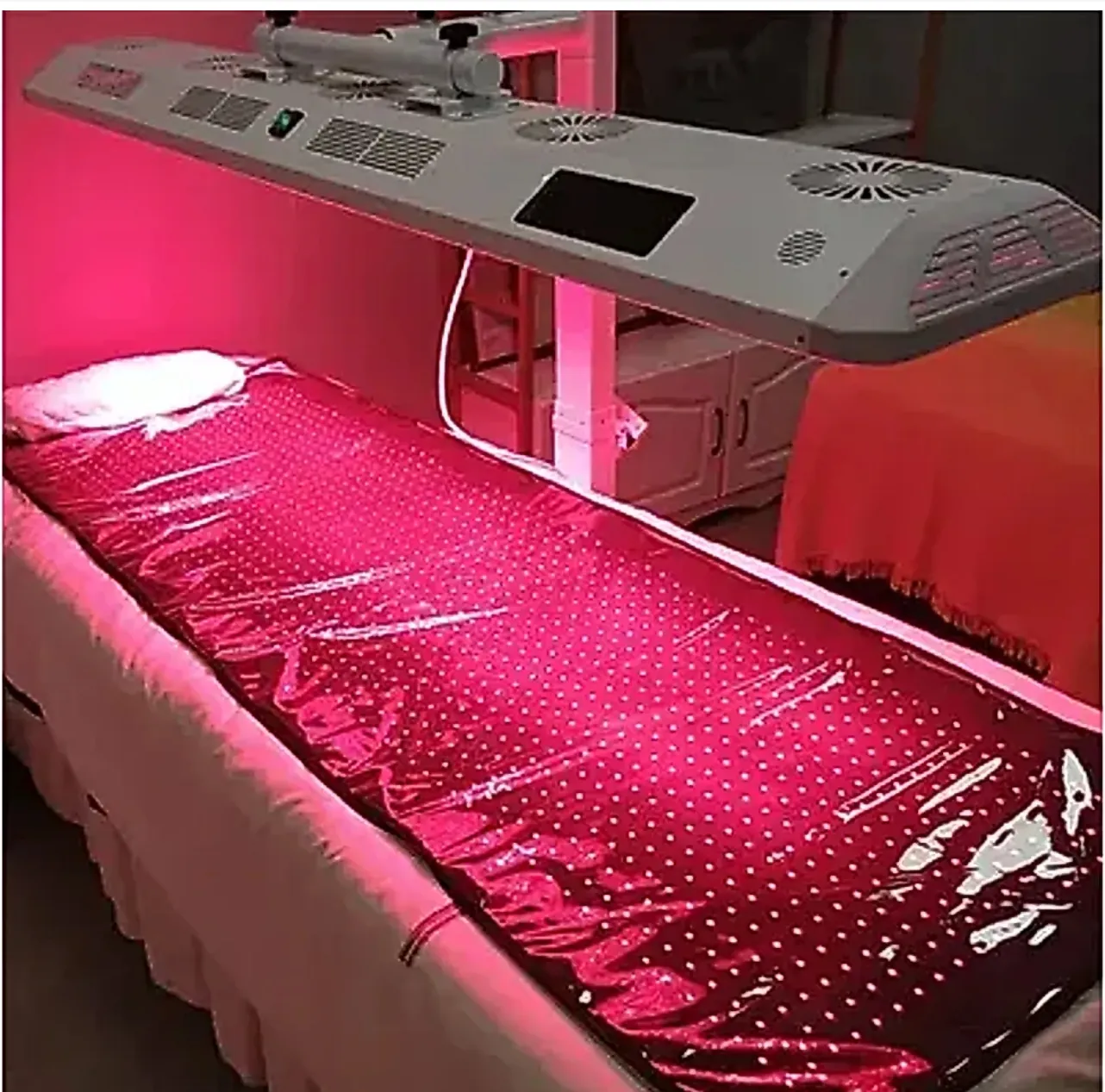
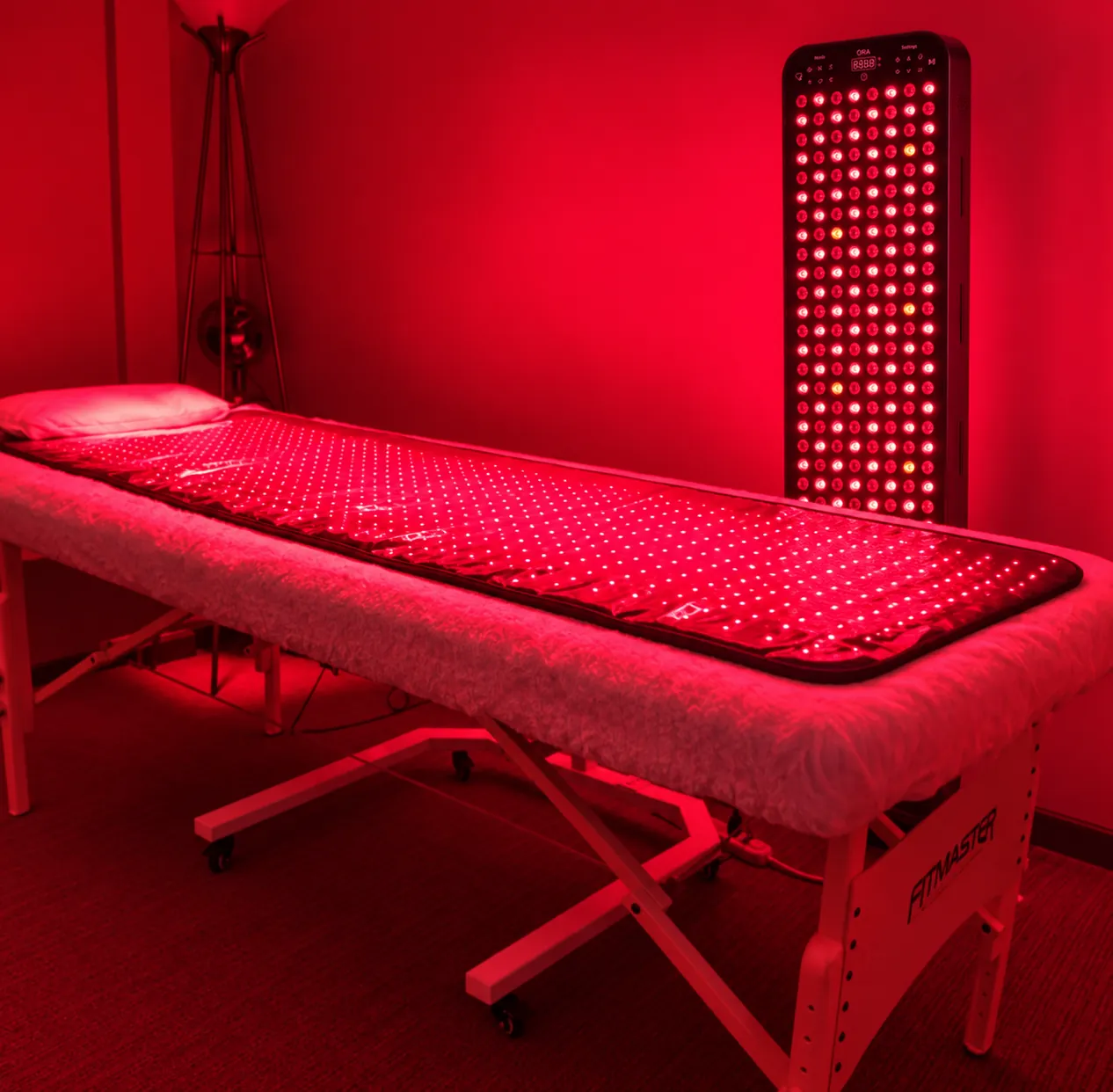
Treatment room with a full-length red LED mat on a massage bed and a tall red light panel standing beside it
Treatment bed covered with a glowing red LED mat, with a large red light device mounted overhead

Example treatment-room setups: a full-length LED mat on a bed, with a standing panel or an overhead device.

⚕ Educational illustration, not medical advice. Red light therapy is not a cure for any disease.

Related devices

Product descriptions summarise each brand's own wording and are the brand's claims, not ours.

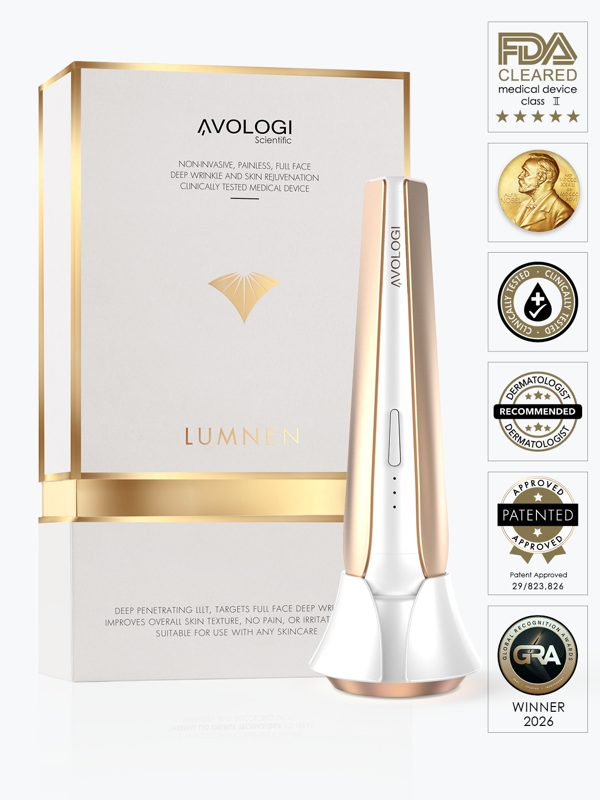
LUMNEN - product photo by Avologi
Avologi · Our partner brand

LUMNEN

$18,750

Described by Avologi as an FDA-certified home-use "bio-stimulator" laser system that combines LED light therapy with laser-based bio-stimulation, aimed at facial volume, firmness and skin vitality.

  • LED + laser
  • Face
View on Avologi
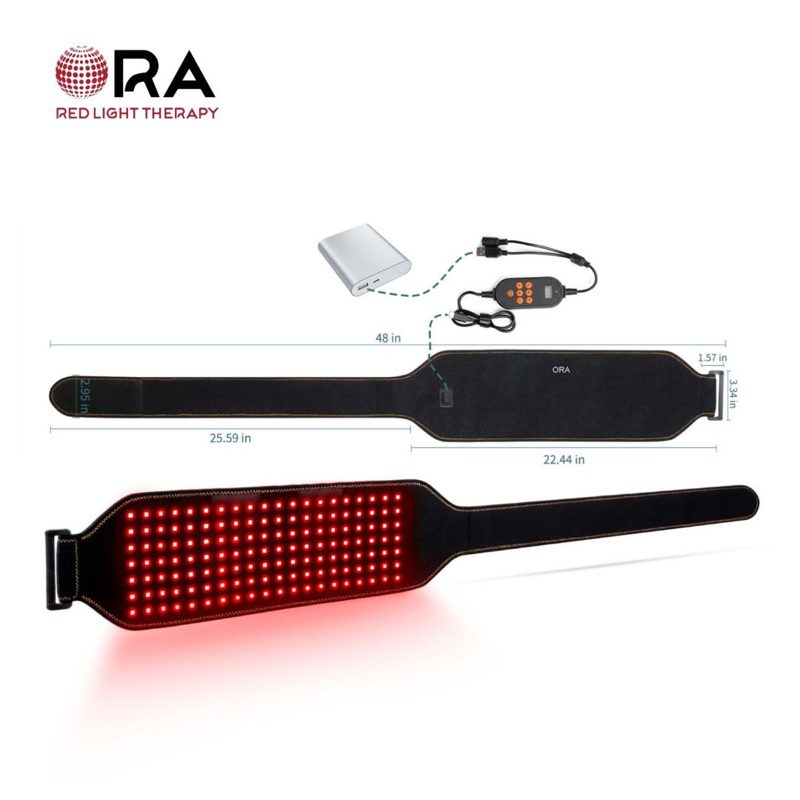
Ora Red Light Belt - product photo by ORA Red Light Therapy
ORA Red Light Therapy

Ora Red Light Belt

Price on request

A flexible wearable red light belt for the torso and back. See the product page for specifications.

  • Wearable
  • Torso / back
View on ORA
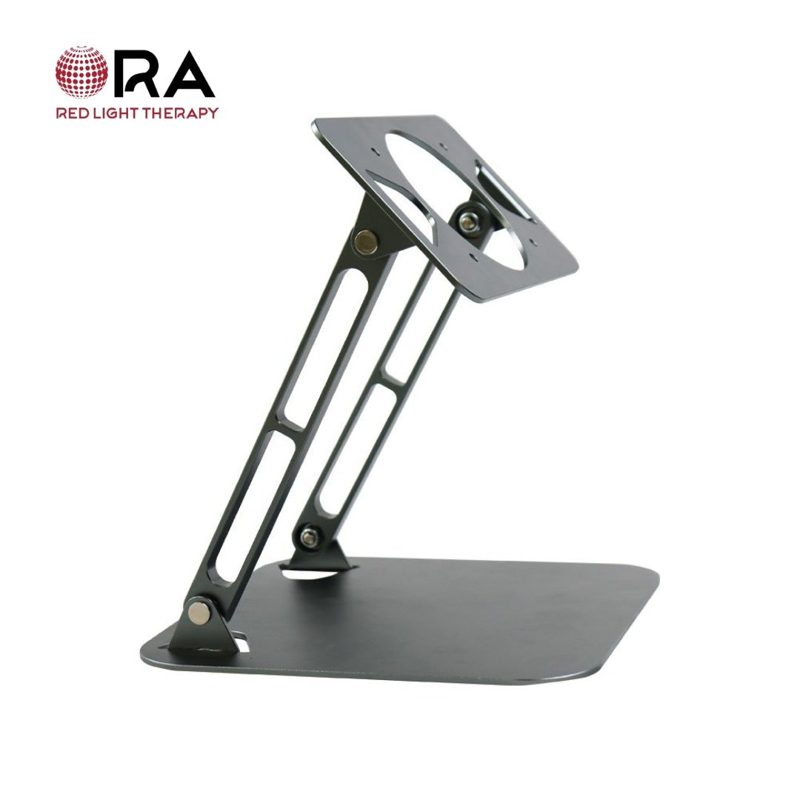
Table Stand - product photo by ORA Red Light Therapy
ORA Red Light Therapy

Table Stand

Price on request

A tabletop stand from ORA for using a light panel at a desk or counter.

  • Accessory
  • Stand
View on ORA
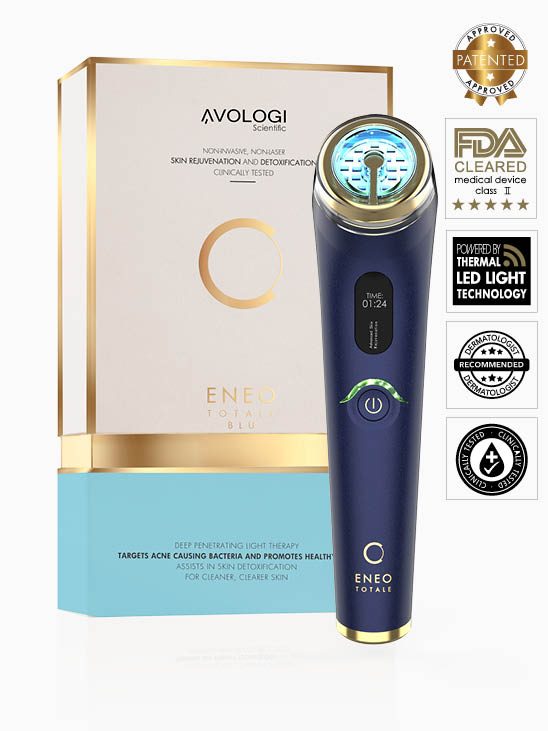
Eneo Totalé Blu - product photo by Avologi
Avologi · Our partner brand

Eneo Totalé Blu

$11,950

A blue-light (415 nm) companion device for blemish-prone skin. Included for completeness: it uses blue light, not red light.

  • Blue 415 nm
  • Blemishes
View on Avologi