The benefits of red light therapy
An honest map of where the evidence is strong, where it's promising and where it's still early.
Beauty & Skin
Skin rejuvenation is one of the best-studied uses of red light. Controlled trials using red (around 633 nm) and near-infrared (around 830 nm) light have measured reduced wrinkles, better elasticity and increased collagen density.
What the research says
- In a randomized split-face trial of 76 patients, 633 nm and/or 830 nm LED treatment twice weekly for four weeks produced measurable reductions in wrinkles and increases in elasticity, with no adverse effects. Lee 2007
- A controlled trial of 136 volunteers found improved complexion, skin roughness and ultrasound-measured collagen density after 30 sessions versus controls. Wunsch 2014
Real results
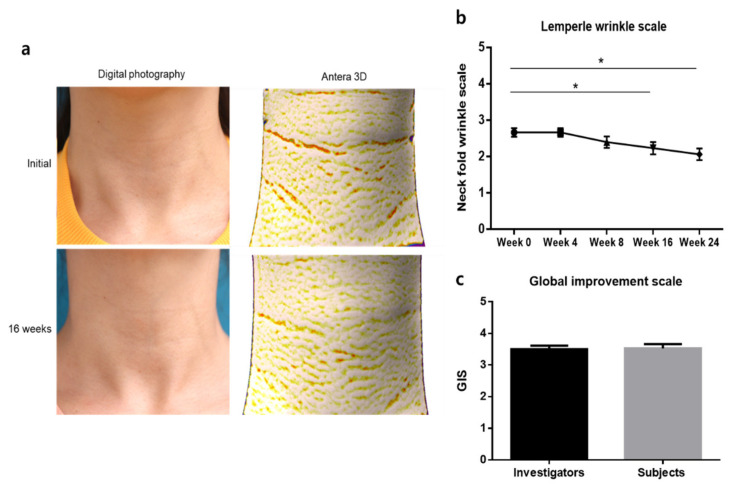
Neck wrinkles: clinical photographs and Antera 3D images at baseline and week 16, plus the paper's wrinkle-score charts (Figure 5, shown as published).
Image: Lee YI et al., J Clin Med (2021), Figure 5 · CC BY 4.0 · Source ↗ · doi:10.3390/jcm10081774
Individual results vary. Shown unaltered, as published by the source.
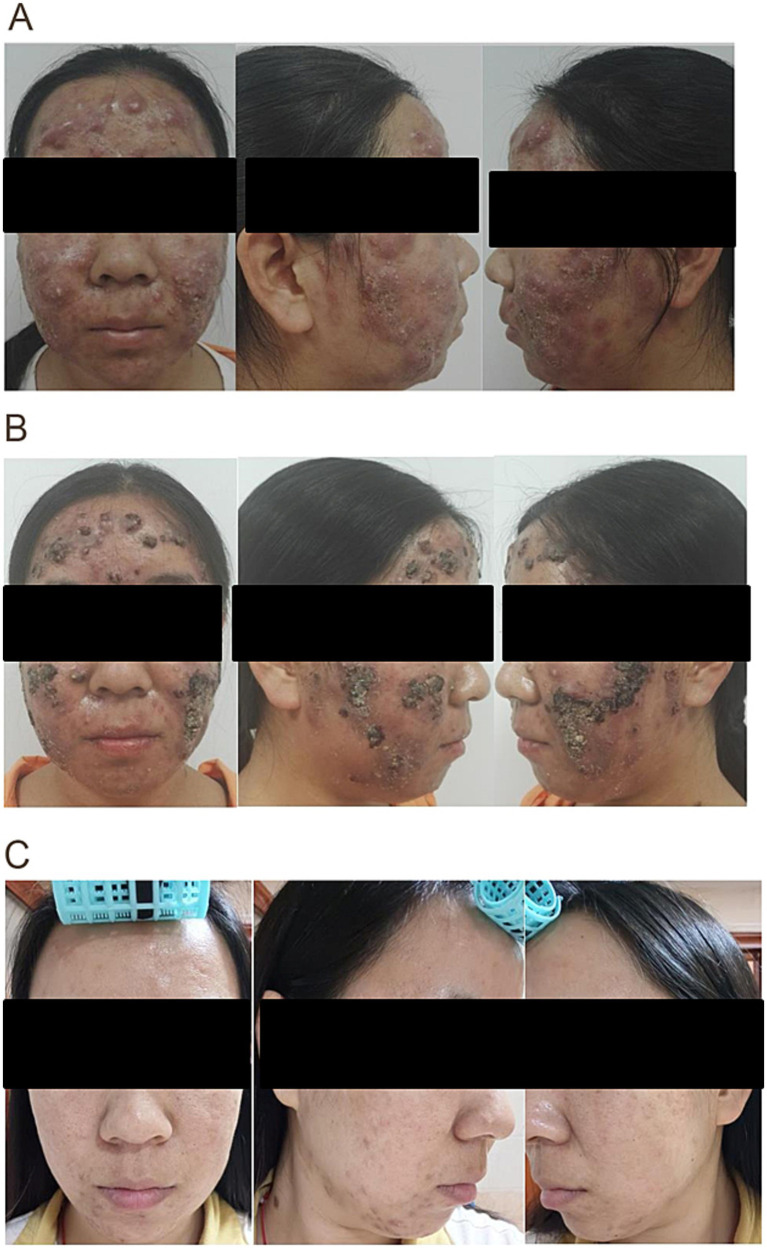
Severe acne conglobata in a 19-year-old: baseline (A), after 1 week (B) and at 8 weeks (C). Eyes masked by the authors.
Image: Hao Y et al., Front Med (2026), Figure 1 · CC BY 4.0 · Source ↗ · doi:10.3389/fmed.2025.1708077
Individual results vary. Shown unaltered, as published by the source.
Pain Relief
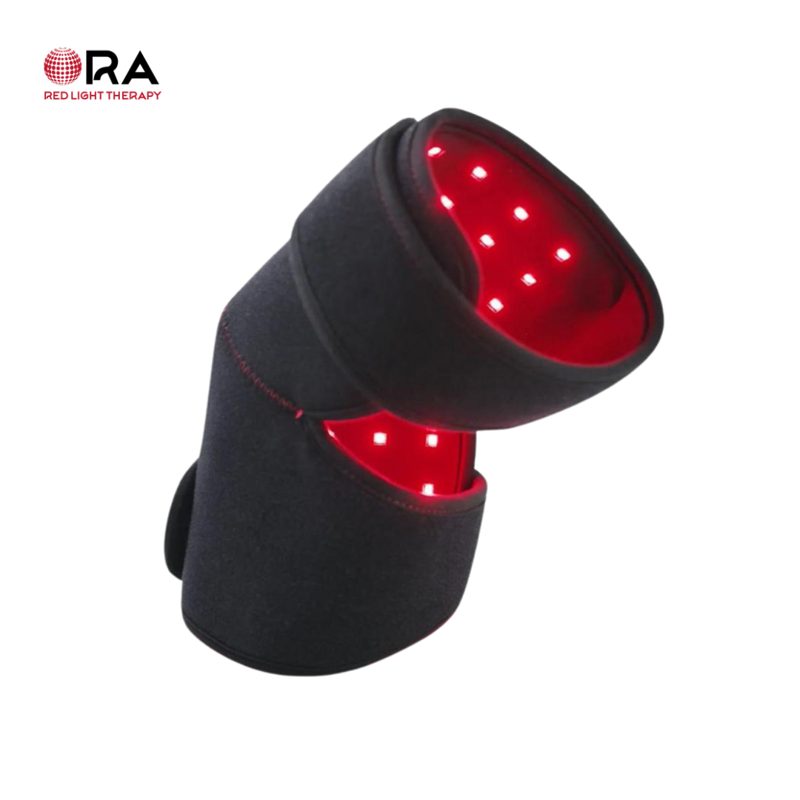
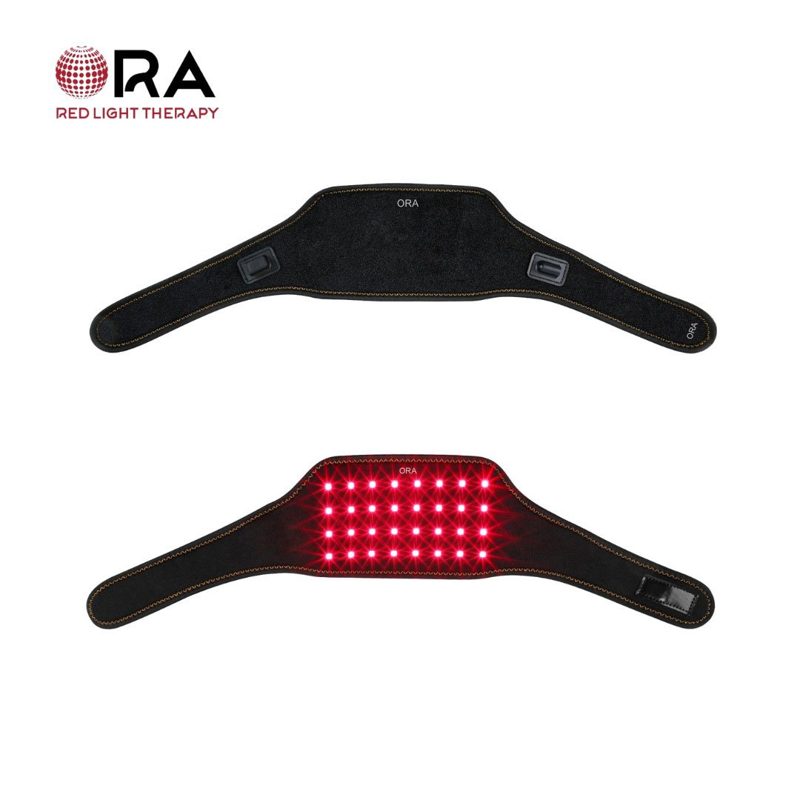
Pain is where photobiomodulation has some of its most robust clinical data — particularly for neck pain and knee osteoarthritis, where meta-analyses of placebo-controlled trials show meaningful pain reduction.
What the research says
- A Lancet meta-analysis of 16 randomized trials (820 patients) found low-level laser therapy reduced neck pain, with relief lasting up to 22 weeks in chronic neck pain. Chow 2009
- In knee osteoarthritis, 22 placebo-controlled trials (1,063 participants) showed reduced pain and disability, especially at recommended doses. Stausholm 2019
Brain & Cognition
Transcranial photobiomodulation — shining near-infrared light on the head — is an exciting but still emerging field. Small controlled studies and a meta-analysis in dementia suggest short-term cognitive benefits.
What the research says
- In healthy volunteers, transcranial infrared laser stimulation improved reaction time, memory performance and mood versus placebo. Barrett 2013
- A 2022 meta-analysis of 13 studies (608 participants with dementia) associated phototherapy with improved global cognition, while evidence for long-term benefit was lacking. Zhu 2022
Longevity & Healthy Aging
No study has shown that red light extends human lifespan. The longevity interest comes from its action on mitochondria, whose energy output declines with age, and from small human studies such as improved aging vision.
What the research says
- In adults around 40 and older, 670 nm light significantly improved blue-axis colour contrast sensitivity and rod thresholds; it had no effect in younger participants. Shinhmar 2020
- Reviews describe how red/NIR light acts on mitochondrial signalling and reduces inflammation — mechanisms relevant to aging biology. Hamblin 2018Hamblin 2017
Hair Growth
Red light devices for pattern hair loss (androgenetic alopecia) are backed by randomized trials and meta-analyses, and a 2025 expert consensus lists androgenic alopecia among PBM's effective uses.
What the research says
- In a double-blind RCT in women, 655 nm light every other day for 16 weeks produced a 37% increase in hair growth compared with placebo. Lanzafame 2014
- A 2025 meta-analysis of 38 studies (3,098 patients) found significantly increased hair density in androgenetic alopecia. Perez 2025
Real results
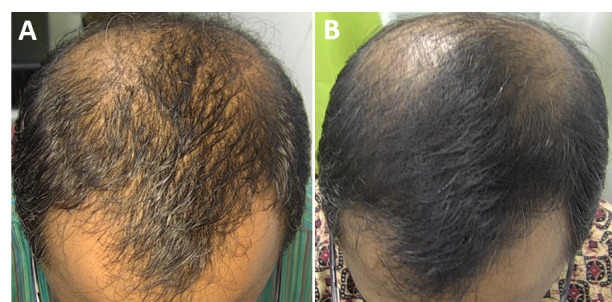
Androgenetic alopecia, male patient: scalp before (A) and after 14 sessions (B), 4-month follow-up.
Image: Chandrashekar BS et al., JMIR Dermatol (2024), Figure 1 · CC BY 4.0 · Source ↗ · doi:10.2196/60858
Individual results vary. Shown unaltered, as published by the source.
Sleep
Sleep is a popular claim but the evidence is thin. The most-cited study is small, and larger controlled trials are needed before firm conclusions can be drawn.
What the research says
- In 20 elite female basketball players, 30 minutes of whole-body red light nightly for 14 days improved sleep-quality scores, serum melatonin and endurance versus a no-light group. Zhao 2012
Muscle Recovery
Sports scientists have tested red and near-infrared light before and after exercise. Meta-analytic data suggest modest gains in performance and recovery, most consistently when light is applied before training.
What the research says
- A meta-analysis of 13 quality RCTs found phototherapy increased repetitions and time to exhaustion versus placebo, mostly when applied before exercise. Leal-Junior 2015
- A review of 46 studies (1,045 participants) reported PBM can increase training-related muscle gains and lower inflammation and oxidative stress in muscle. Ferraresi 2016
Wound Healing
Tissue repair is where PBM reaches clinical guidelines: international cancer-care guidelines recommend specific PBM protocols to prevent oral mucositis, and a 2025 dermatology consensus lists wound ulcers among its effective uses.
What the research says
- MASCC/ISOO guidelines recommend PBM to prevent oral mucositis in certain cancer treatment settings (stem-cell transplant, head & neck radiotherapy). Zadik 2019
- A 2025 multidisciplinary consensus found PBM effective for wound ulcers of multiple causes, decubitus ulcers and acute radiation dermatitis. Maghfour 2025
Real results
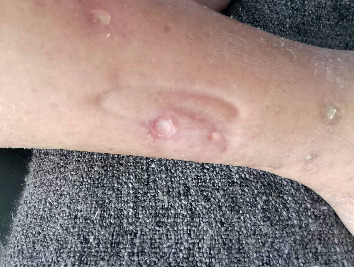
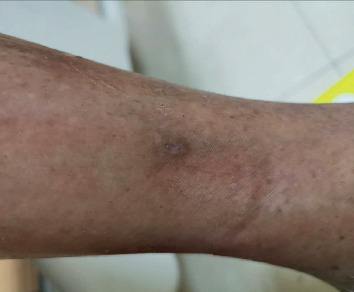 BeforeAfter
Diabetic leg ulcers in an 84-year-old woman: first observation (Figure 1) vs complete healing after 30 days (Figure 5). Single case report.
Image: Merigo E et al., Case Rep Med (2020), Figures 1 & 5 · CC BY 4.0 · Source ↗ · doi:10.1155/2020/7428472
Individual results vary. Shown unaltered, as published by the source.
⚕ Educational content only — not medical advice. Talk to a qualified clinician before starting any therapy. Medical disclaimer →